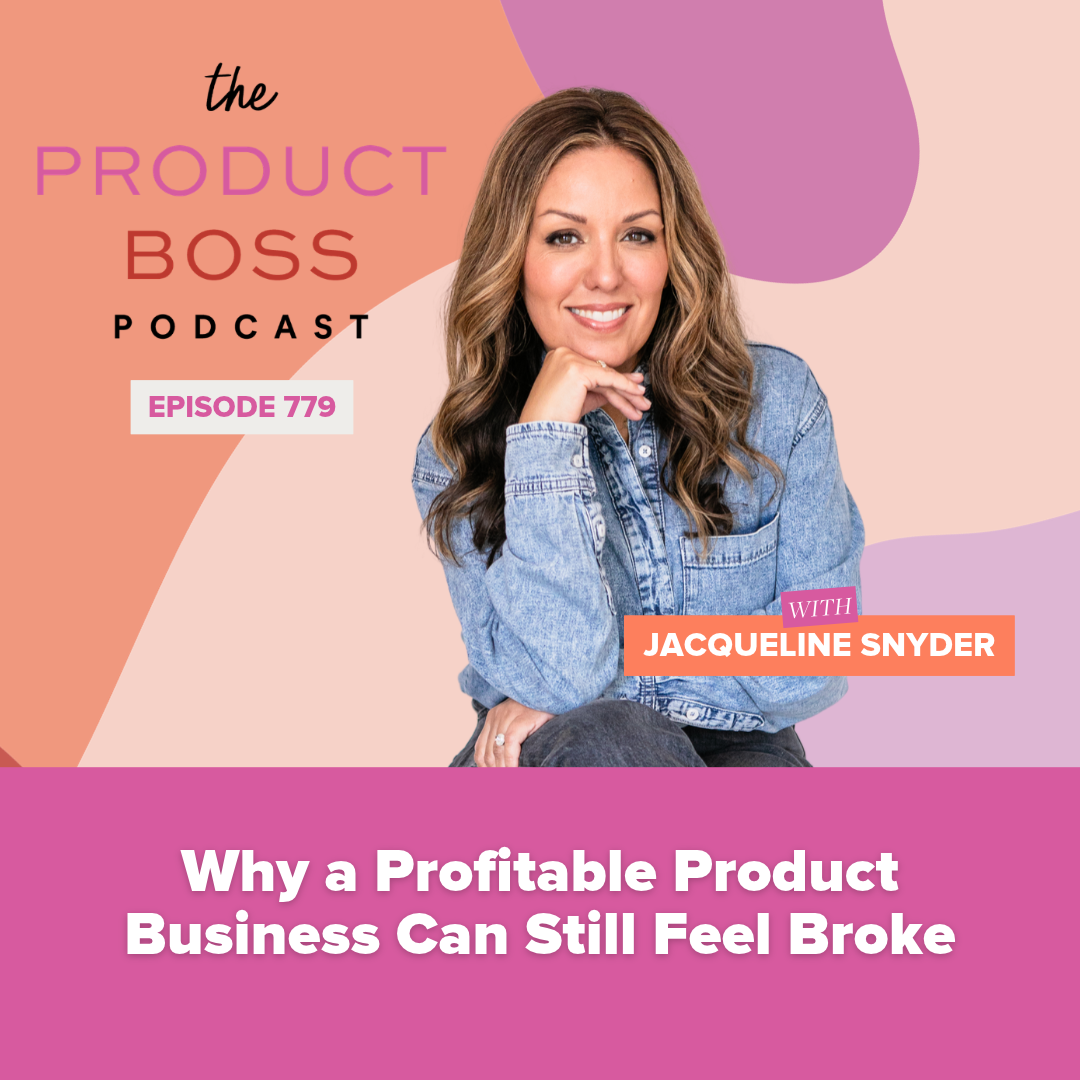
Welcome back, Product Bosses! Have you ever looked at your sales and felt proud, then looked at your bank account and felt broke? You can feel profitable and broke at the same time, especially when you run a product-based business. In this episode, I'm breaking down what your numbers mean, why cash flow is always a bottleneck for product brands, how to think about leveraging money instead of fearing debt, and the mindset that comes with making money and holding it.
WHY YOU CAN BE PROFITABLE AND STILL FEEL BROKE
If you grew up watching DuckTales, you may remember Scrooge McDuck diving into his vault of coins. Many of my clients believe they should have that vault to pull from, and one of the biggest lies you can tell yourself is that you should always have piles of cash on hand. Product-based businesses work differently from service businesses, because you have to put money out first for inventory, raw goods, labor, and finished products. When I was designing fashion, I developed product a year ahead and sold it seven to nine months before it hit stores, and I wasn't paid until I shipped. If you sell to big box stores or retailers, they might be net 30, 60, or 90, which means they don't pay you until that long after delivery. Add in equipment, build-outs, and trade show booths (I paid five to seven thousand dollars for a booth for Cuffs Couture, and more if I wanted electric), and it's clear why every time you make money, it has to go back out. Cash flow will always be a bottleneck in a product business, and the more you scale, the more inventory you need to hold. That's why profitability matters so much. In slower months, know how much you need to make to pay your bills, keep the lights on, and keep a profit margin. In your "make it rain" months, like Q4, don't burn through everything by December. Hold cash back for overhead and investments. Getting profitable isn't a light switch, because it involves renegotiating costs, raising prices, and improving margins, but it's the foundation for everything else.
So how do you work through a tight cash flow? By leveraging money, not by going into debt for debt's sake. I know a lot of people have been taught that all debt is bad. That advice was built for people who work for other people and have a cap on their income, and it isn't how a business is run. Please remember I'm not a financial advisor, so take this as my experience and talk to a professional who knows your business. One option is a loan from a platform like Shopify, PayPal, or Stripe, where they take a percentage of each sale until it's repaid, which is basically borrowing against future revenue. Another is a line of credit, ideally from a smaller bank or credit union, which usually costs far less than a credit card. Credit cards work best for short-term leveraging that you know you can pay back, since the interest is so high. Buy now, pay later options like Klarna and Affirm help your customers pay over time, and you still get paid up front, and they can work for your own investments too. There are also SBA loans and grants, and one of my Collective clients recently received a $20,000 grant. Even factors, which fashion brands use, give you cash up front for production in exchange for a percentage of sales. I once had a client with a $40,000 Bloomingdale's order who could have mortgaged her house, but we worked with a factor and gave up 5% instead. I've also leveraged money myself. I invested in a six-figure strategist and advisor and chose to pay monthly on a card instead of in full, so I could keep cash for new team members and software while still paying the card off each month.
The real shift is learning the difference between an expense and an investment. A $1,000 iPhone is an expense. A $1,000 piece of machinery that increases your capacity so you can sell $10,000 of product is an investment, and so is hiring or coaching that moves you forward faster. Before spending, ask what your return is, whether that's money or time, the same way you would with return on ad spend, where $1 in should bring $4 or $7 back. Paying someone $20 an hour so you can focus on the $100 and $1,000 tasks that only you can do is an $80 profit. Time is not a renewable resource, but money is, so I would invest all day long to collapse the timeline. Waiting for a day when your expenses stop and only income comes in will never arrive. Ask yourself where your beliefs about money come from, whether it's the stories you heard at home or the cash-only advice you've seen online. Everyone running a physical product brand deals with cash flow, including billion-dollar brands, and some of the richest self-made women in the country built their fortunes selling products, like Sara Blakely, Jamie Kern Lima, and Suzi Weiss-Fischmann of OPI. You're not broke or irresponsible. You're extended, and you can control your mindset about that.
The key takeaways I want you to remember are:
Profitable and broke is normal in a product business. You pay for inventory, labor, and equipment before you get paid, and retailers can take 30, 60, or 90 days, so protect your profit and hold back cash in your strongest months.
Think leverage, not debt. Lines of credit, short-term credit cards, buy now pay later, SBA loans, grants, and factors can all bridge the gap, and a professional advisor can help you choose what fits your business.
Make it an investment, not an expense. Ask what your return is in money or time, and invest to collapse your timeline, because money is renewable and time is not.
Product Boss, remember: you're not broke, you're extended, and you don't have to figure out your numbers alone. If you want support with your profitability, pricing, and cash flow, join us for our free weekly workshop HERE!
In This Episode, You’ll Learn:
00:00 Why can you run a profitable business and still feel broke?
02:00 What makes cash flow different for product-based businesses?
03:45 How cash flow can become a bottleneck as your business grows.
06:45 The upfront costs of trade shows and the wait for wholesale payments.
08:00 How to protect profitability during slow months and busy seasons.
09:30 Ways to leverage money, from lines of credit to short-term financing.
12:00 How buy-now-pay-later options can help customers purchase higher-priced products.
15:45 What should you consider before making a major business investment?
17:15 The mindset shift from seeing every expense as a cost to evaluating its potential return.
18:45 How can you measure ROI, including the value of time saved?
20:00 Why paying for help can free you up to focus on higher-value work.
21:15 Why being cash-strapped doesn't automatically mean your business is broken.
22:00 How factoring may help cover production costs while waiting for customer payments.
Resources + Links
Ready to lead, run, and grow your product business beyond a million dollars, without being the bottleneck? Join me this week for a FREE workshop HERE!
Ready to stop guessing and follow a proven system? Book your strategy call HERE!
Get business tips sent right to your inbox - join the newsletter!
Follow
Jacqueline on IG: @theproductboss
