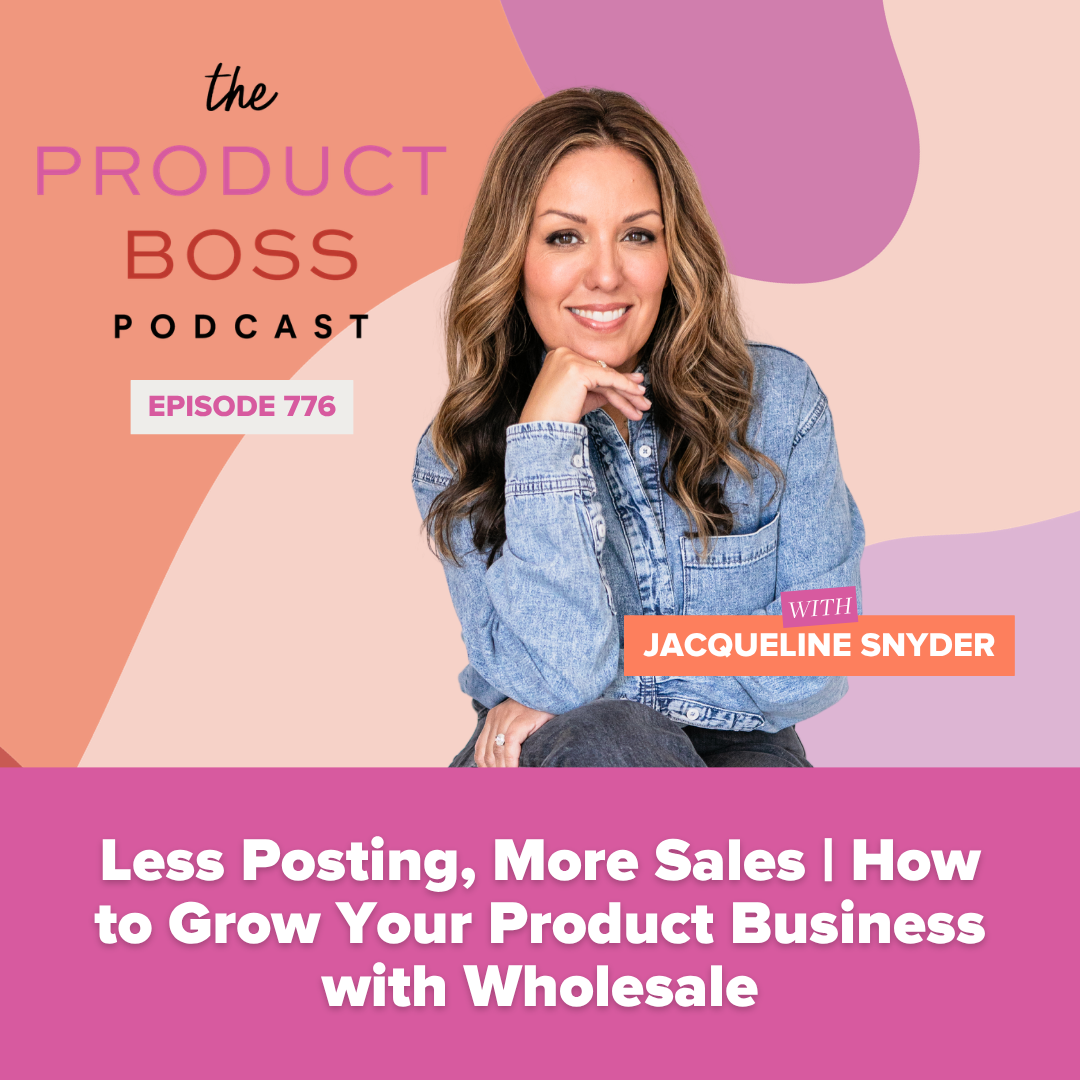
Welcome back, Product Bosses! Are you sick and tired of everyone telling you to create more content, more Reels, more videos, more visibility? Here's the hill I'm willing to die on: wholesale is one of the fastest ways to grow a product-based business. In this episode, I'm breaking down why wholesale deserves a spot in your strategy, the first moves I'd make if I were starting from scratch, and how to turn a first test order into a long-term retail partnership.
WHY WHOLESALE IS STILL THE SMARTEST WAY TO GROW YOUR PRODUCT BUSINESS
I grew up in this industry. My parents started in denim in the '80s, selling wholesale to retailers and in person, because back then there was no direct to consumer. Unless you owned a brick and mortar shop, you simply didn't have access to the customer. Fast forward to when I launched my own brand, Cuffs Couture, and the wholesale buying environment was already shifting, with platforms like Fair cutting out showrooms and sales reps. Platforms like that are a great tool, but they're just one tool in your wholesale tool belt, not the entire strategy, because whenever you play in someone else's playground, you play by their rules. The real power of wholesale is exposure. Kim Kardashian discovered my cuffs while walking through a shop in LA, and Carrie Underwood's stylist found my product on a retail shelf, which led to her wearing it in a music video. None of that happened because of follower counts. It happened because my products were physically sitting in retail environments. And if I were starting a business today, I'd build a high-converting website, start my email list right away, and make wholesale my first way of selling.
So where do you begin? Move one is pricing for profit, because the flex isn't revenue, it's profit margin. I would rather you have a six-figure business with 20 to 30% profit, paying yourself and reinvesting, than a million-dollar business running at 10% and calling it a hobby. A super basic starting point is to take your cost of goods (raw materials plus labor for one SKU), multiply by two for your wholesale price, then multiply by two again for your retail price. Building that margin in from the start also leaves room if a larger retailer later asks for a discount. Move two is making your product sell itself on the shelf. Customers discovering you in a store don't care how many followers you have, they care whether they understand the product at a glance. I recently coached a Collective member with a beauty bug repellent that did great at in-person markets, where she could explain it, but struggled on retail shelves because the packaging didn't clearly say what it was. With Cuffs Couture, my product was a folded piece of fabric that nobody would understand on its own, so I created a point of sale display that explained it visually, with very few words. Ask yourself how your product sells when nobody is there to explain it. I also recommend a minimum of about four styles or SKUs per retailer so your brand holds weight on the shelf, and I'd never let a retailer order just one or two pieces, since you won't learn what a true bestseller looks like.
Move three is the one most people miss: focus on reorders, not just new stores. A first order is usually a test order, and the real health of your business comes from retailers reordering. Don't assume they'll remember to reorder on their own, especially if your product is a small part of their store. It's your job to reach out, remind them, and treat them like partners. If they aren't reordering, get curious about why. When I was traveling, I would pop into stores that carried my line as a customer, and sometimes I'd find my product flung in a bowl with no context, which explained exactly why it wasn't selling. Then I'd reach out to the owner with suggestions on how to display it better. Support your retailers on social and in emails too, by pointing customers to where they can buy you in their city. You are never in competition with your retailers, even if you sell online. They are your bread and butter.
The key takeaways I want you to remember are:
Wholesale is exposure, not just sales. Selling through retailers puts your product in front of customers and opportunities that followers alone can't deliver, and one store can bring in $500 to $1,000 versus ten customers at $50 each.
Price for profit and make your product sell without you. Build your wholesale margin in from the start (cost of goods times two, times two again), and design your packaging and point of sale so customers understand it at a glance.
Treat the first order as a test and go after the reorder. Follow up, support your retailers, and dig into why a product isn't selling through, because reorders are what build a healthy wholesale business.
Product Boss, remember: your retailers are partners, and every shelf you earn is a new place for customers to discover you. If you want help building your pricing, line sheets, and wholesale strategy, join us for our free weekly workshop HERE!
In This Episode, You’ll Learn:
00:00 Why posting more content isn't the only way to grow your product business.
01:15 How wholesale lets you leverage other people’s audiences.
04:15 How retail exposure created major opportunities for my brand.
06:45 Are your products priced for wholesale and profit?
08:45 How to build wholesale and retail margins into your product pricing.
12:15 What makes a product easier to understand and buy from a shelf?
15:15 Ways to help your products sell through in a retail environment.
18:00 What’s the difference between landing a wholesale account and growing one?
20:00 How to support retailers and create more reorders.
21:15 Why wholesale can create more opportunities for distribution, visibility, and revenue.
Resources + Links
Ready to lead, run, and grow your product business beyond a million dollars, without being the bottleneck? Join me this week for a free workshop HERE!
Ready to stop guessing and follow a proven system? Book your strategy call HERE!
Get business tips sent right to your inbox - join the newsletter!
Follow
Jacqueline on IG: @theproductboss
